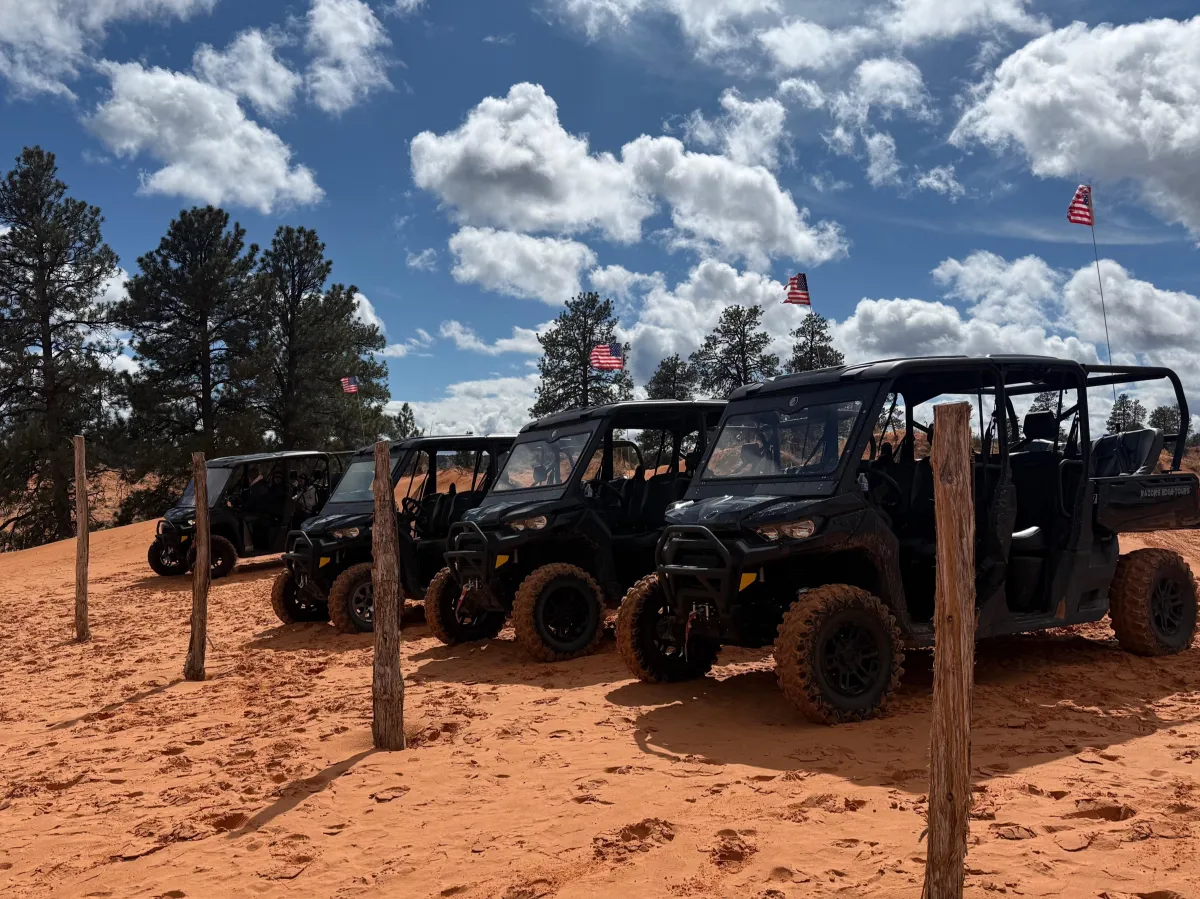
Understanding SxS vs UTV: Key Differences Explained
Off-Road, Powersports, SxS, UTV
What Is a SxS? Understanding Side-by-Sides and How They Compare to UTVs
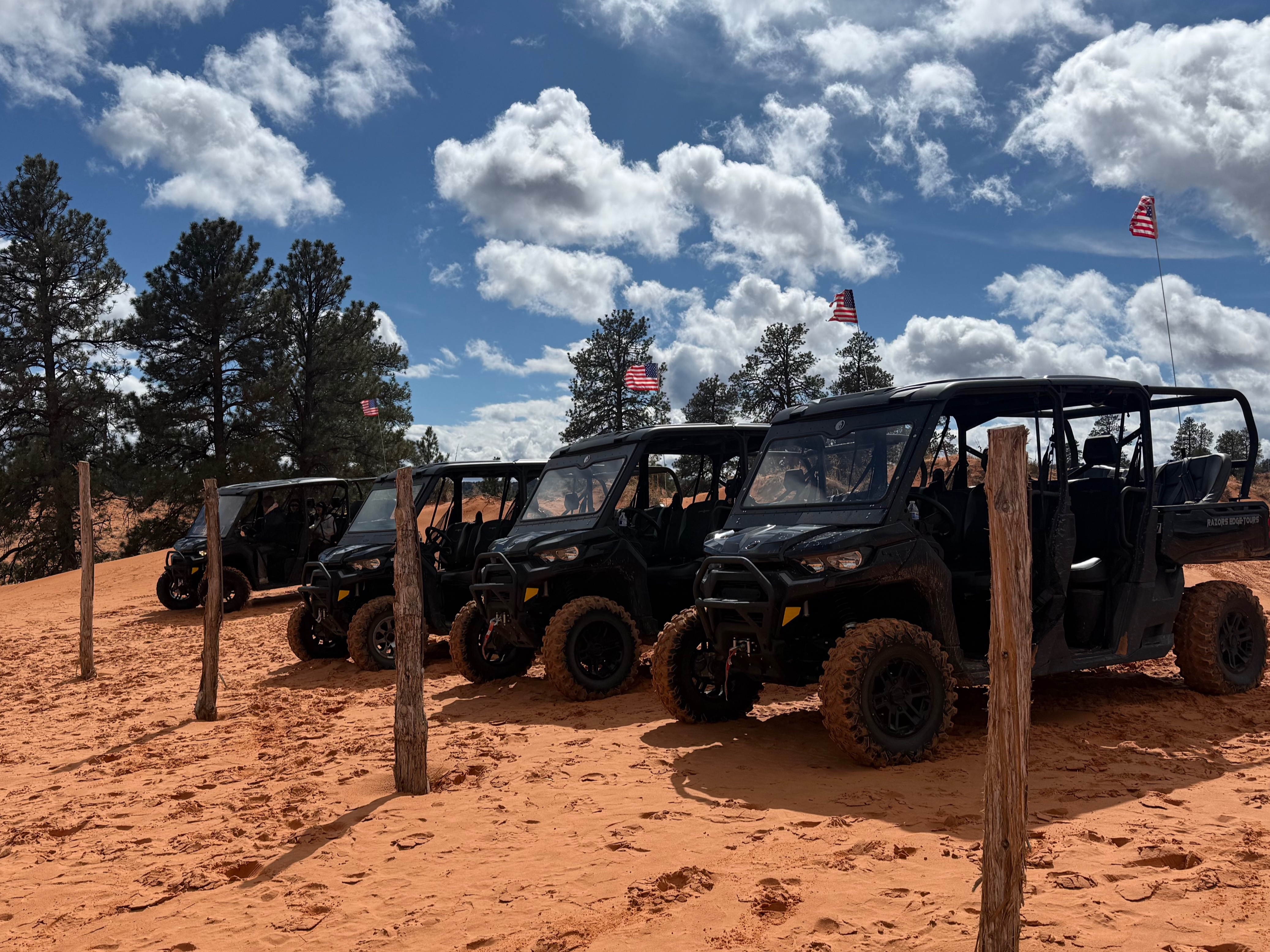
If you have spent any time around off-road riders, farmers, or outdoor enthusiasts, you have probably heard the terms “SxS” and “UTV” thrown around. They sound similar; people often use them interchangeably, and yet there are a few key differences worth understanding before you buy or rent one. You will also hear a third term just as often: ATV, or all-terrain vehicle. This guide breaks down what a SxS actually is, where UTVs and ATVs fit in, and clarifies SxS vs UTV vs ATV so you can choose the right machine for work or play.
What Does SxS Mean?
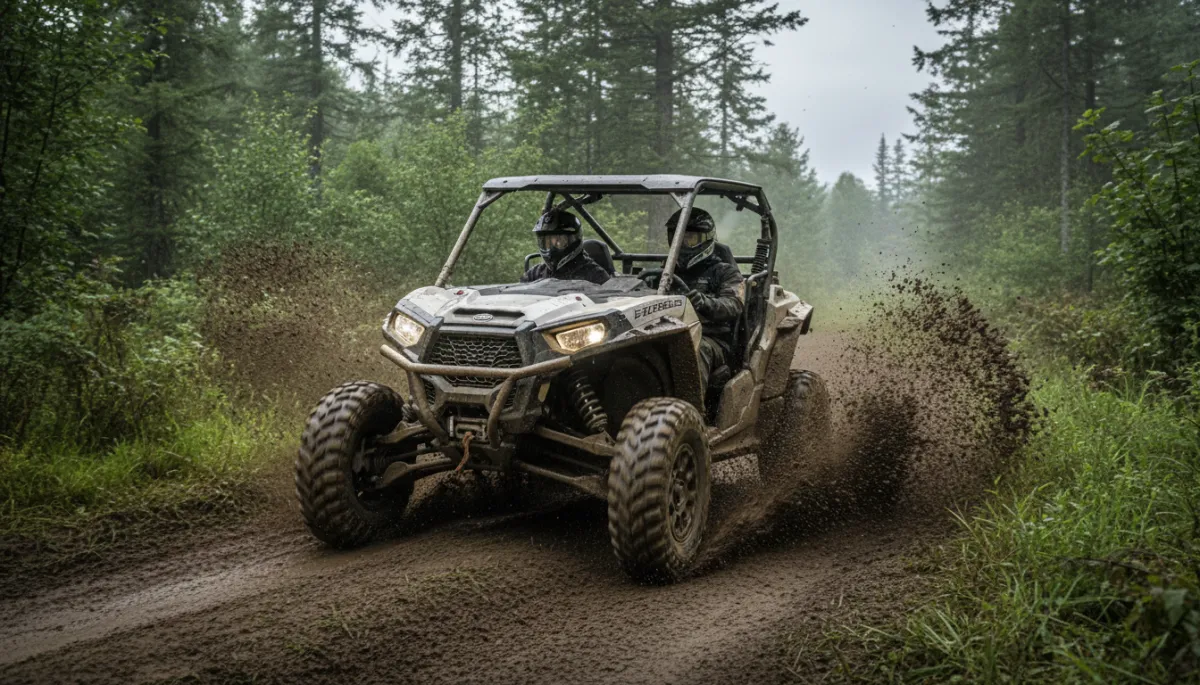
SxS stands for side-by-side, a type of off-road vehicle where the driver and passenger sit next to each other, rather than straddle the machine like on an ATV or quad. Think of a compact, rugged buggy with a steering wheel, gas and brake pedals, and bucket or bench seats. That is a SxS in its simplest form.
Most SxS models have:
A steering wheel instead of handlebars
Foot pedals for throttle and braking, like a car
Bucket or bench seats with seat belts for two to six occupants
A roll cage or protective frame around the cab
SxS vehicles are designed for stability and safety at higher speeds or on rough terrain, making them popular for trail riding, sand dunes, hunting, and even racing. Many riders see them as a more comfortable, more secure evolution of the traditional ATV.
Where UTVs Come In: Utility Task Vehicles Explained
UTV stands for Utility Task Vehicle (sometimes called Utility Terrain Vehicle). As the name suggests, these machines are built with utility in mind. They typically feature cargo beds, towing capacity, and accessories that make them ideal for work on farms, ranches, job sites, or large properties.
A typical UTV will have:
A rear dump bed or cargo box for tools, feed, or materials
Stronger frames and suspension tuned for hauling rather than racing
Lower top speeds but higher torque for pulling and climbing
Options for windshields, roofs, doors, heaters, and work lighting
Because they are so versatile, UTVs show up everywhere from vineyards and campgrounds to construction sites and hunting leases. They can carry multiple passengers, tow trailers, and handle rough terrain far better than a pickup truck in tight or muddy areas.
What Is an ATV and How Is It Different?
ATV stands for All-Terrain Vehicle. Unlike a SxS or UTV, an ATV is a straddle-style machine: the rider sits on a narrow seat, much like a motorcycle, and uses handlebars to steer. Most ATVs are designed for one rider, though some “2-up” models are built to safely carry a passenger behind the driver.
Core traits most ATVs share:
Handlebar steering and a motorcycle-style seat you straddle
Body movement is a big part of control—riders shift weight in turns and on hills
Typically, smaller and lighter than SxS/UTVs, with a shorter wheelbase
Racks instead of beds for carrying gear, coolers, or small tool loads
💡 Pro Tip: If you like an active, “on-the-machine” riding style and need something narrow and nimble for tight trails, an ATV can be a great fit compared to the larger footprint of SxS and UTV models.
SxS vs UTV: Are They the Same Thing?
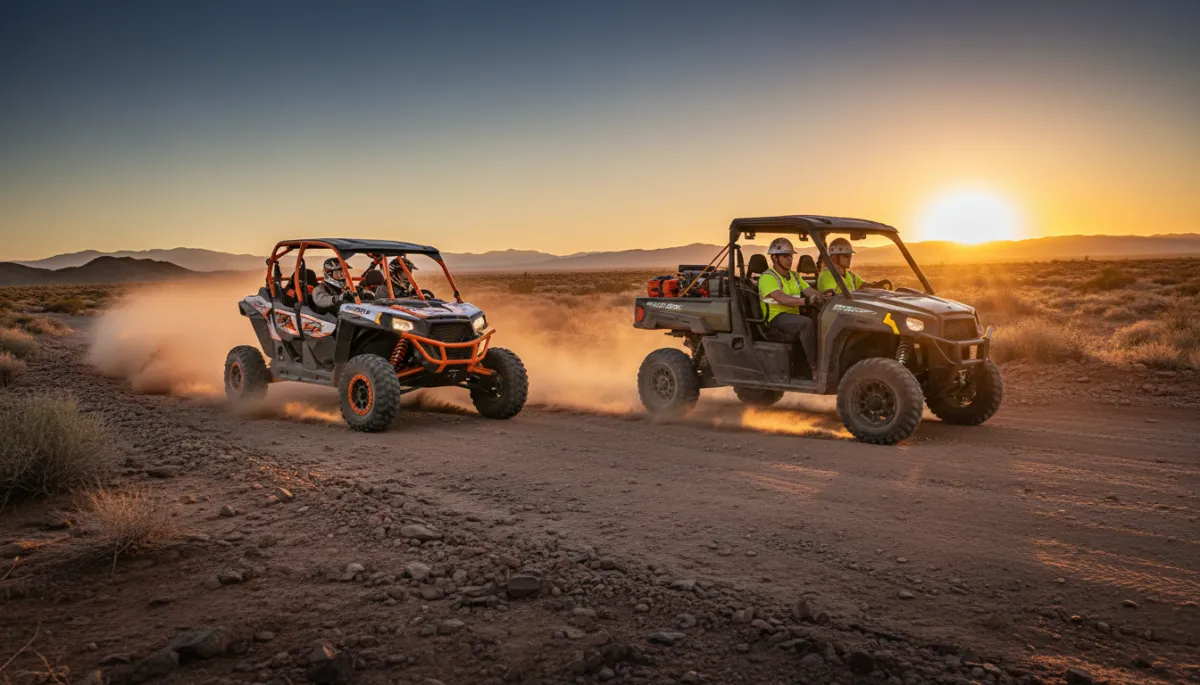
This is where confusion sets in. In everyday conversation, SxS and UTV are often used to describe the same style of vehicle. Both terms refer to four-wheeled, off-road machines with side-by-side seating, a steering wheel, and a roll cage. Technically, however, there is a subtle difference in emphasis:
SxS describes the seating layout and overall format of the vehicle (driver and passenger sit side by side).
UTV highlights the purpose of the machine, focusing on utility and work tasks.
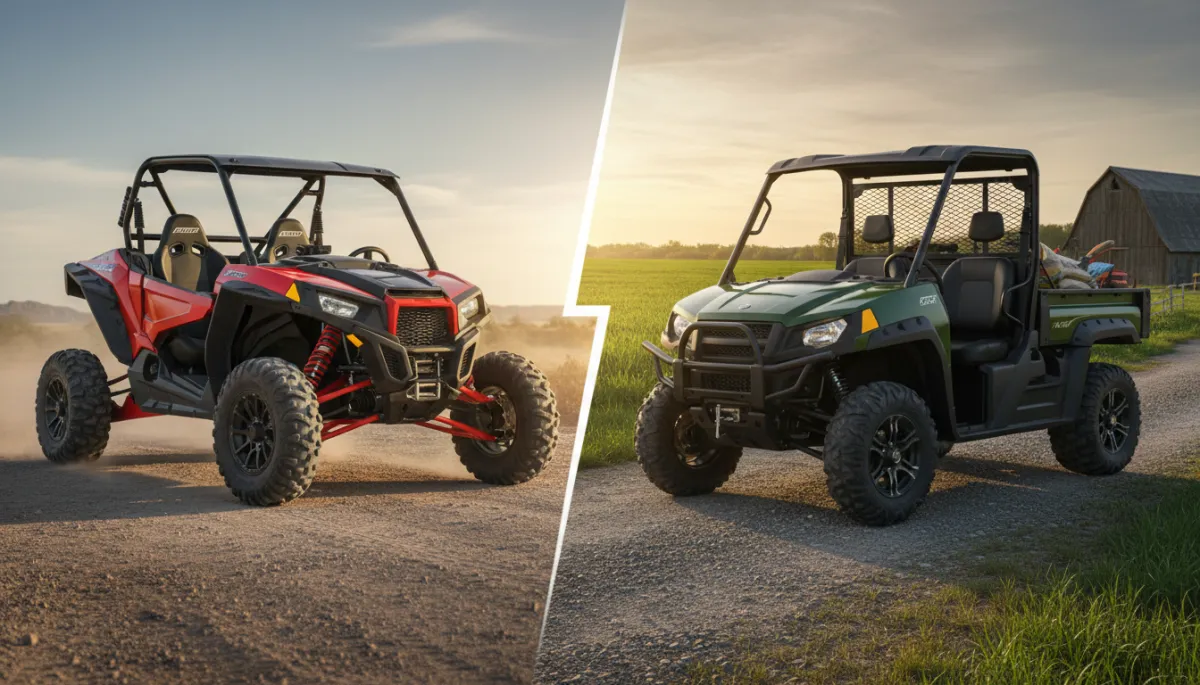
Many manufacturers blur the lines further by offering both sport SxS models and utility SxS/UTV models built on similar platforms. For example, one version might come with long-travel suspension and aggressive tires for desert racing, while a closely related model swaps in a cargo bed, winch, and work accessories for farm use. Both are technically side-by-sides, but only one is truly utility-focused in the classic UTV sense.
ATVs vs SxS and UTVs: How Do They Compare?
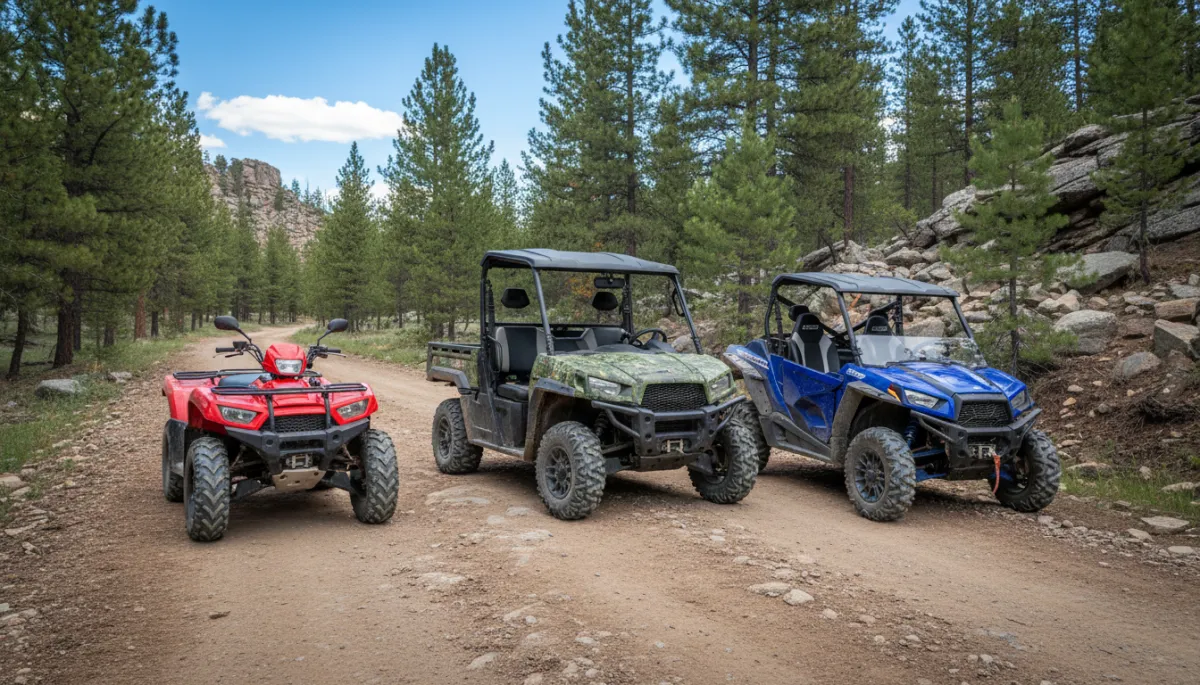
When you add ATVs into the mix, the main differences between all three categories come down to riding position, capacity, comfort, and capability. Here is how ATVs stack up against SxS and UTVs:
Riding Position: ATVs use a straddle seat and handlebars, demanding more rider input and body movement. SxS and UTVs feel more like small cars with seats, belts, and steering wheels.
Passengers: Most ATVs carry one person (or two on 2-up models). SxS and UTVs can seat two, four, or even six people side by side, making them better for family rides or work crews.
Comfort & Protection: ATVs are open and exposed. SxS and UTVs add roll cages, seat belts, and often windshields, roofs, and doors, which provide more comfort and safety in bad weather or on rough terrain.
Work Capability: Utility-focused UTVs usually win on towing and hauling, thanks to larger beds and higher payload ratings. ATVs can still pull small trailers and handle chores, but they cannot match the all-day work capacity of a full UTV.
Trail Access: ATVs are narrower and lighter, which can be a big advantage on tight or technical trails. Some riding areas even have width restrictions that favor ATVs over wider SxS and UTV machines.
“Think of an ATV as the nimble solo machine, a sport SxS as the thrill ride for two or more, and a UTV as the workhorse that can still play on the weekends.”
Key Differences Between Sport SxS and Utility-Focused UTVs
When people say, “SxS vs UTV,” they are usually comparing sport-oriented side-by-sides with work-oriented utility models. Here are some practical distinctions to keep in mind:
Performance: Sport SxS models prioritize horsepower, suspension travel, and top speed. UTVs emphasize torque, stability under load, and controlled power for towing or climbing.
Cargo and Towing: UTVs usually have larger cargo beds, higher payload ratings, and stronger hitches. Sport SxS machines may have small storage areas but are not designed to haul heavy loads all day.
Comfort and Protection: Utility models often come with more enclosed cabs, roofs, windshields, and heater options, because owners use them in all weather. Sport SxS models tend to be more open and focused on visibility and weight savings.
Handling: Sport SxS vehicles are tuned for responsive steering and quick acceleration on trails, dunes, or tracks. UTVs handle predictably under load and are more about control than carving corners at high speed.
Which Is Right for You: SxS, UTV, or ATV?
Instead of getting hung up on labels, start with how you plan to use the machine most days of the year. If your primary goal is recreation—weekend trail rides, dune trips, or exploring forest roads—a sport SxS will likely make you happiest. Look for models with good suspension, comfortable seats, and features like power steering and selectable drive modes for different terrain.
If your priority is work—hauling fence posts, feeding livestock, moving tools, or shuttling crews around property—then a utility-focused UTV is the smarter investment. Pay attention to payload and towing ratings, bed size, and whether the machine can be easily outfitted with attachments like sprayers, snowplows, or winches.
Many buyers fall somewhere in the middle, wanting a machine that can handle chores during the week and fun on the weekends. In that case, consider a crossover SxS/UTV—a model with a usable cargo bed and decent towing capacity, but still nimble and powerful enough for trail riding. These hybrids are increasingly popular and show just how much the SxS and UTV categories overlap.
📌 Key Takeaway: If you mostly ride solo on tight trails, an ATV may be ideal. If you want to bring friends or family along, a sport SxS shines. If you are hauling, towing, and working every day, a UTV is hard to beat.
Final Thoughts
At the end of the day, a SxS is simply a side-by-side off-road vehicle with car-like controls and seating, while a UTV is a side-by-side built with utility at its core. An ATV, by contrast, is a smaller, straddle-style machine that favors a more active riding position and excels on narrow, technical trails. In casual conversation, the terms often refer to the same type of machine, but understanding the difference in focus—sport versus work, solo riding versus hauling passengers—will help you narrow down your options. Decide what matters most to you, then shop for the off-road vehicle—ATV, SxS, or UTV—that best matches your mix of chores, trails, and adventures.